October 4, 2026
How to Choose a Fried Shallot Supplier: A Checklist for Importers
Importing fried shallots? Use this checklist to compare suppliers on raw material, ingredients, certifications, shelf life, packaging, samples and documents.
Fried shallots look simple, but quality varies a lot between suppliers. Two products can look the same in a photo and taste very different after three months on a shelf.
If you import fried shallots for retail, food service or manufacturing, use this checklist before you sign a supply deal.
1. Raw Material
Ask which shallot variety is used and where it is grown.
- Shallots with lower water content fry crisper and keep their crunch longer.
- A supplier that knows its variety and growing region usually has better control over quality.
2. Ingredients
Read the ingredient list carefully.
- Best: shallots, oil, salt.
- Watch out for: flour, starch or fillers. They add weight and lower the cost, but also lower the quality.
- Ask about preservatives. Many buyers today prefer clean labels.
3. Type of Oil
The frying oil affects taste and shelf life. Ask which oil is used and how often it is changed. Fresh oil gives a cleaner taste and a lighter color.
4. Certifications
Certificates show that the supplier follows food safety systems. Common ones include:
- Halal — required by many buyers in Asia, the Middle East and Muslim communities worldwide.
- HACCP — food safety hazard control.
- GMP — good manufacturing practice.
- ISO 9001 — quality management.
- National food registration — in Indonesia, this is BPOM.
Ask for copies, and check that names and dates are valid.
5. Shelf Life and Packaging
Fried shallots are sensitive to moisture.
- Ask for the shelf life unopened and how it was tested.
- Check the packaging type — vacuum packs or sealed jars protect crispness better.
- Ask about bulk packaging and carton sizes for shipping.
6. Minimum Order and Capacity
Make sure the supplier fits your volume.
- What is the minimum order quantity (MOQ)?
- What is the monthly production capacity?
- Can they handle seasonal peaks, such as holidays?
7. Samples
Never order in bulk without samples. When you test them:
- Check color, crunch, oil and salt level.
- Leave one opened pack for a week and check it again.
- Compare samples from more than one supplier side by side.
8. Private Label Options
If you want to sell under your own brand, ask if the supplier offers private label (OEM) production — your packaging, your label, their product.
9. Export Experience and Documents
A supplier that already exports knows the paperwork. Ask:
- Which countries they ship to now.
- Which documents they provide (certificates, health or origin documents).
- Which Incoterms they offer, such as FOB or CIF.
10. Communication
Fast, clear replies in English save time and avoid costly mistakes. Pay attention to how quickly and clearly the supplier answers your questions during the quote stage.
Example: Hunay
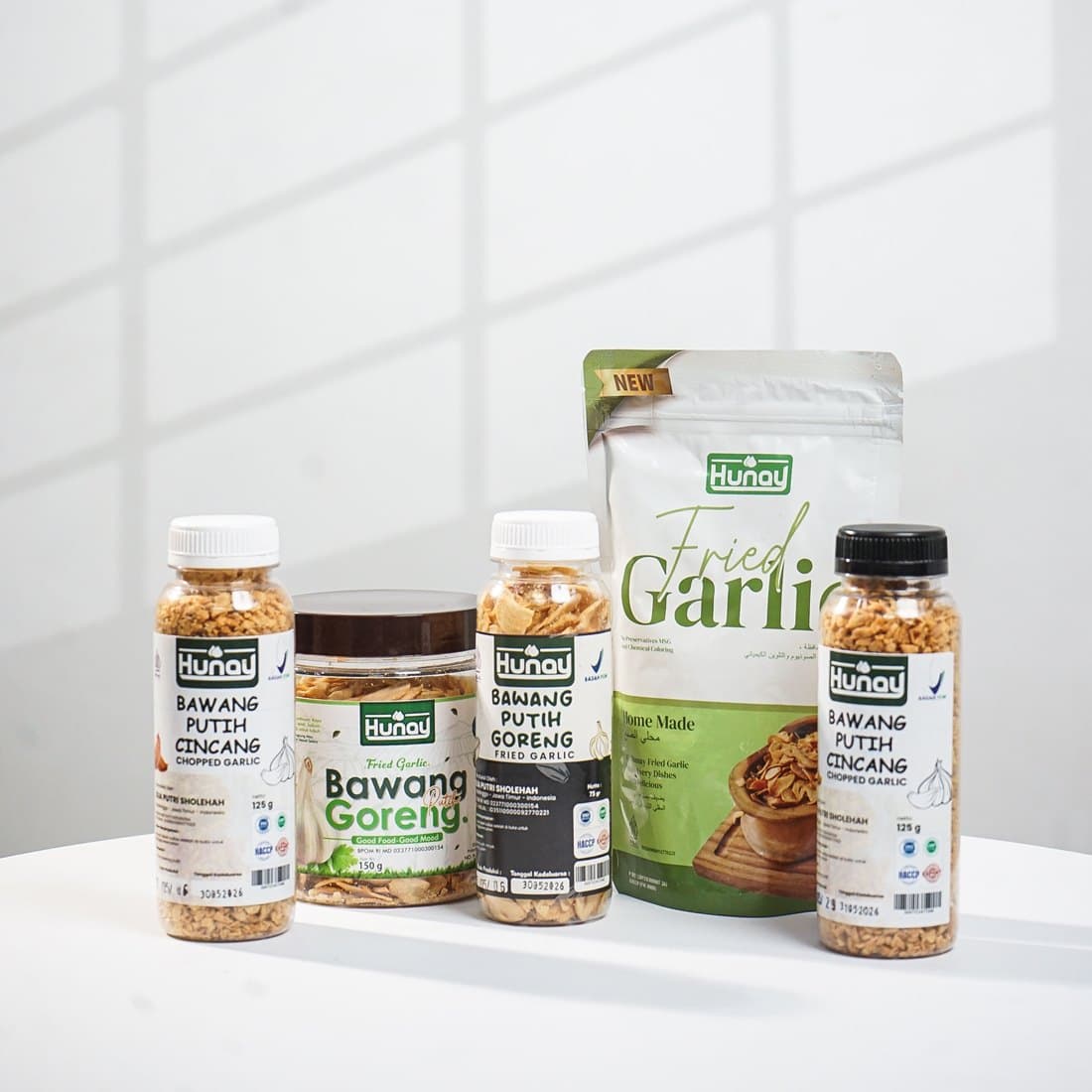
Hunay, a producer in Probolinggo, Indonesia, makes fried shallots from biru lancor shallots with coconut oil and salt, without preservatives. It holds Halal MUI, BPOM, HACCP, GMP and ISO 9001:2015 certification and exports to Japan, South Korea, Canada, Singapore, the United States and Australia. Details are on the wholesale page.
Quick Checklist
- Variety and origin of shallots
- Ingredients: shallots, oil, salt only
- Certifications with valid copies
- Shelf life and packaging
- MOQ and capacity
- Samples tested side by side
- Private label option
- Export documents and Incoterms
- Clear communication
Interested in Hunay products?
Order via WhatsApp