October 10, 2026
Importing Fried Shallots from Indonesia: A Step-by-Step Guide for Buyers
Planning to import fried shallots from Indonesia? Learn why Indonesian shallots stand out, how the ordering process works, which documents to ask for, and how to keep the product crisp in transit.
Fried shallots are now a standard topping far beyond Southeast Asia. Ramen shops in Japan, Korean kitchens, Asian grocery chains in the US, Canada and Australia, and food manufacturers all buy them in bulk.
Indonesia is one of the best places to source them. This guide explains why, and walks you through the import process from first inquiry to delivery.
Why Source Fried Shallots from Indonesia?
Shallots are a core crop. Indonesia grows shallots on a large scale, and bawang goreng (fried shallots) is part of everyday cooking. Producers have deep experience with slicing, frying and drying.
Distinct shallot varieties. Varieties like biru lancor from Probolinggo, East Java, are small and dense with low water content. They fry evenly, turn golden instead of dark, and stay crisp longer than larger, wetter shallots.
No batter needed. Traditional Indonesian fried shallots are just shallots, oil and salt. Many cheaper products on the world market are coated with flour or starch to add weight. Buyers who want a clean label prefer the pure version.
Halal supply. Indonesia has a well-established halal certification system (Halal MUI), which matters for buyers in Asia, the Middle East, and Muslim communities worldwide.
Who Buys Imported Fried Shallots?
- Importers and distributors supplying Asian grocery stores
- Restaurant groups serving ramen, pho, laksa, nasi goreng and rice bowls
- Food manufacturers using fried shallots in instant noodles, seasonings, sauces, snacks and ready meals
- Private label brands that want their own packaging and label
The Import Process, Step by Step
1. Send an inquiry
Share your company name, destination country, the product you need (fried shallots, fried garlic or both), and your expected monthly volume. This lets the supplier quote the right packaging and price.
2. Test samples
Always test samples before ordering. Check color, crispness, oil content and taste. If you are a manufacturer, test them inside your own product, not only straight from the bag.
3. Agree on specifications
Confirm in writing:
- Ingredients (ideally shallots, oil, salt only)
- Cut size and color range
- Packaging type and size (retail pouch, jar, or bulk bags in cartons)
- Shelf life in that packaging
- Labeling requirements for your country
4. Confirm commercial terms
Agree on minimum order quantity (MOQ), price, Incoterms (such as FOB or CIF), payment terms and lead time. Small first orders are common while you test the market.
5. Prepare documents
Ask your supplier which documents they can provide for your shipment. Importers commonly request:
- Commercial invoice and packing list
- Certificate of origin
- Halal certificate
- Product specification sheet
- Certificates such as HACCP or ISO 9001
Requirements differ by country, so check with your customs broker or food authority before the first shipment. They can also confirm the correct HS code for your product.
6. Ship and receive
Fried shallots are light and shelf-stable, so they ship well by sea or air without refrigeration. The main risk is moisture.
Keeping Fried Shallots Crisp During Shipping
Moisture is the biggest enemy of fried shallots. On a long sea journey, temperature changes can cause condensation inside containers. To protect quality:
- Use vacuum-sealed or nitrogen-flushed packs with a good moisture barrier.
- Pack in strong cartons to prevent crushing.
- Store in a cool, dry warehouse after arrival — never in a cold room, where humidity makes them soft.
- Rotate stock first in, first out.
Well-packed fried shallots typically keep 6–12 months unopened.
Common Mistakes to Avoid
- Choosing on price alone. Cheap fried shallots often contain flour or are fried in old oil, which shortens shelf life and leaves a bitter taste.
- Skipping samples. Photos do not show crispness or flavor.
- Not checking certificates. Ask for copies, and make sure they are current.
- Ignoring packaging. The same product can last weeks or months depending on the pack.
Importing from Hunay
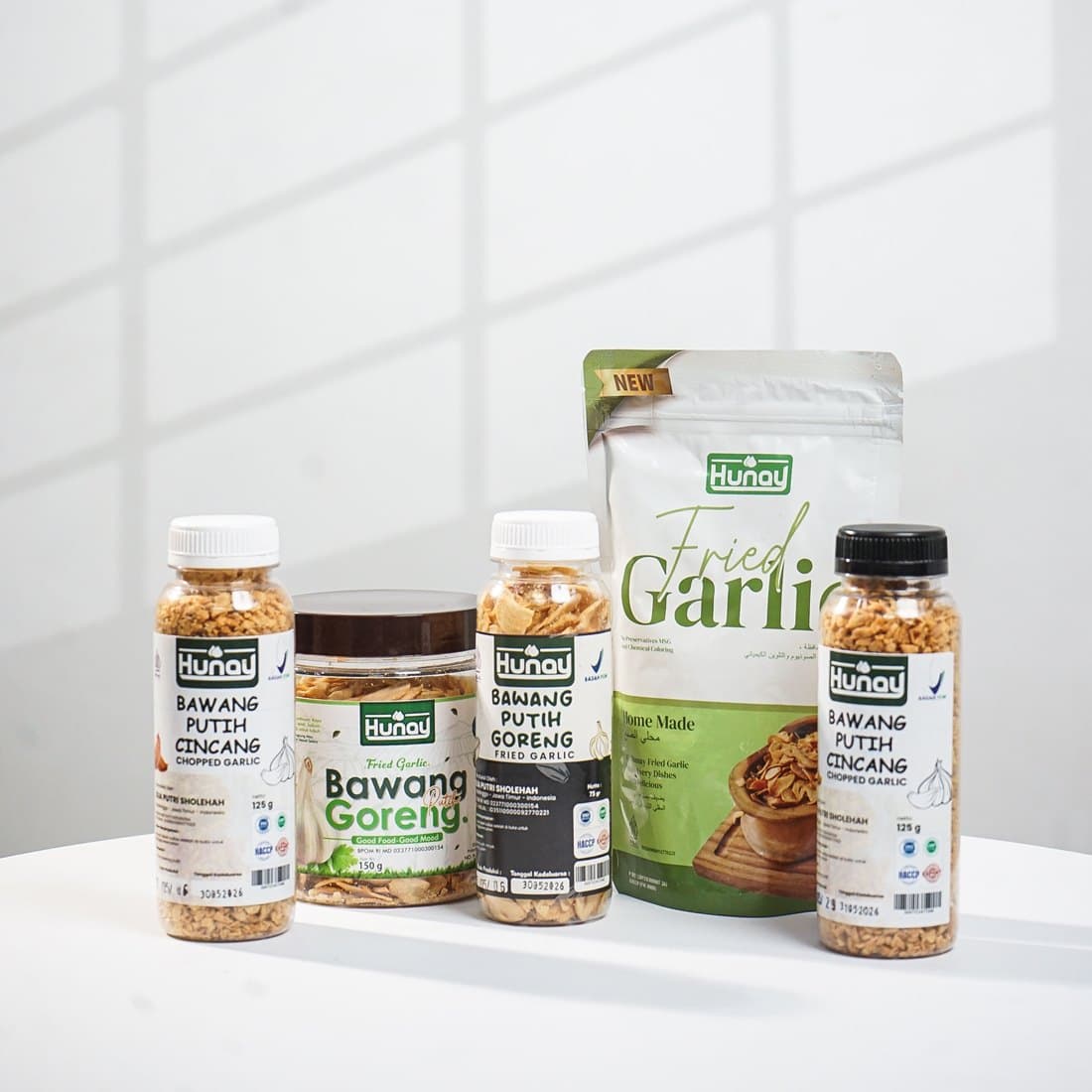
Hunay produces fried shallots and fried garlic from biru lancor shallots grown in Probolinggo, East Java, fried in coconut oil with no preservatives.
- Certifications: Halal MUI, BPOM, ISO 9001:2015, HACCP — copies on request
- Markets: Japan, South Korea, Canada, Singapore, the United States and Australia
- Minimum order: from 10 kg
- Shelf life: 6–12 months unopened (vacuum packed)
- Private label: your brand and packaging, from raw shallots to export-ready goods
Visit our wholesale page to request samples and a quotation. We reply in English.
Quick Summary
- Indonesia is a strong source of pure, crisp fried shallots, especially from varieties like biru lancor.
- Send an inquiry, test samples, confirm specs and terms in writing, then prepare documents.
- Check import requirements and HS code with your customs broker.
- Protect the product from moisture with good packaging and dry storage.
Interested in Hunay products?
Order via WhatsApp